
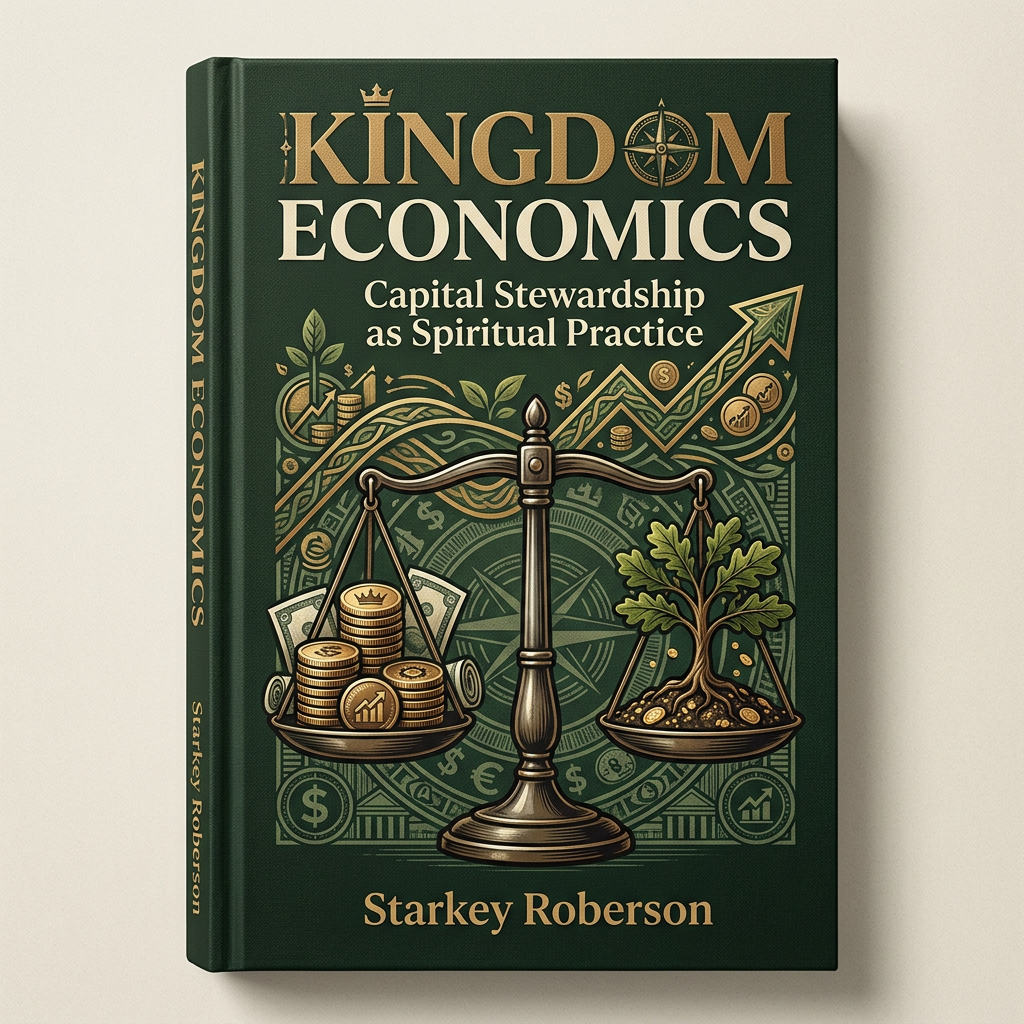
Table of Contents
Wealth has often been misunderstood within spiritual contexts. Some traditions reject it entirely—treating poverty as inherent to holiness and wealth as evidence of spiritual failure. Others pursue it without theological framework—accumulating resources without understanding their purpose or stewarding them wisely. Kingdom Economics offers a fundamentally different perspective.
Wealth is not the goal—it is a tool. Money is a technology for storing and transferring value across time and space. Like all technologies, it is morally neutral in itself. The question is not whether wealth should exist. The question is how it should be stewarded. What is it for? Who should hold it? What obligations come with it? How should it be deployed?
This book explores the theology and practice of economic stewardship as a spiritual discipline. It is not primarily about personal financial planning, though stewardship principles apply at every level of economic life. It is fundamentally about understanding capital as entrusted responsibility—resources that flow to those who can manage them effectively, with accountability to something larger than personal gain.
Kingdom Economics begins with a conviction: that the way capital flows through an economic system reflects and shapes a theological vision. Systems that are designed to concentrate wealth will concentrate it. Systems designed to create access will create it. The structure matters. The values embedded in the system matter. The intention behind how the system is built matters.
This is why understanding the economics of the Kingdom—how capital should flow, who should steward it, and toward what ends—is essential for anyone who wants to exercise genuine influence over the future. Wealth flows toward those who understand these principles and build systems accordingly.
Steward wealth as responsibility.
Deploy capital toward genuine impact.